
Blog
The Importance of Global Energy Trade and the Challenges of Transportation Through Strategic Corridors

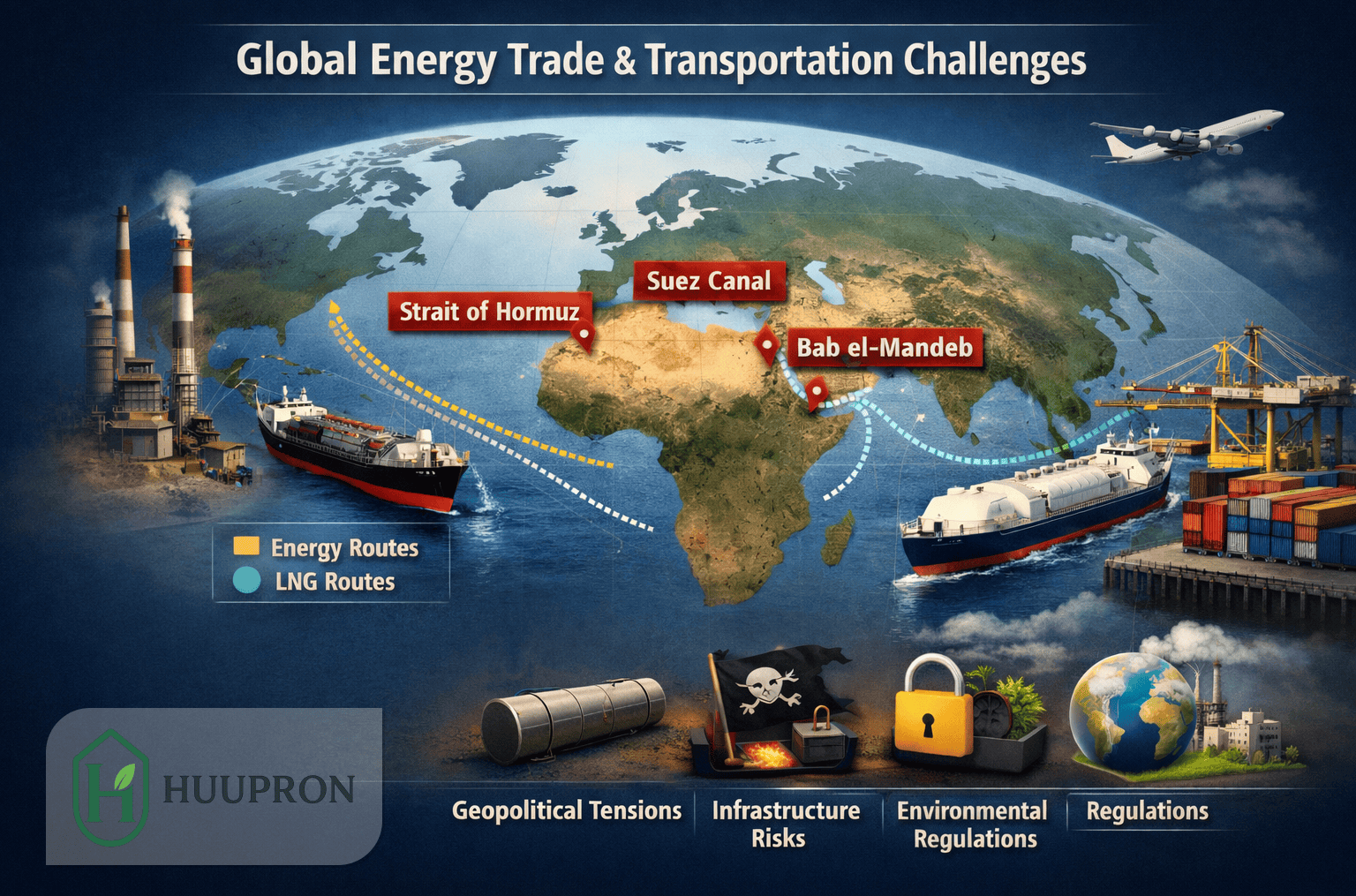
products move daily through strategic maritime and land corridors that connect producers to consumers. Any disruption in these routes can trigger economic instability, price volatility, and geopolitical tension across regions.
1. Why Energy Trade Matters to the Global Economy
Energy is not just a commodity — it is the foundation of industrial production, transportation, and economic growth. Countries with limited domestic energy resources rely heavily on international trade to sustain their economies.
Stable energy trade enables:
Predictable industrial output
Energy security for importing nations
Revenue stability for exporting countries
Without reliable energy flows, inflation, production slowdowns, and political pressure quickly follow.
2. Strategic Energy Corridors and Their Global Role
A significant portion of the world’s energy supply passes through a small number of critical corridors. These routes act as economic arteries for global trade.
Key examples include:
Strait of Hormuz
Suez Canal
Bab el-Mandeb
Disruption in any of these corridors can affect millions of barrels of oil and massive volumes of LNG per day.
3. Major Challenges in Energy Transportation Geopolitical Risks
Conflicts, sanctions, and political instability can immediately threaten transportation routes and energy supply continuity.
Infrastructure Vulnerability
Pipelines, ports, and shipping terminals require constant investment. Aging infrastructure increases the risk of accidents and supply interruptions.
Security Threats
Piracy, sabotage, and cyberattacks have become growing risks, especially in narrow maritime chokepoints.
Environmental and Regulatory Pressure
Stricter environmental regulations and climate-related risks complicate logistics and increase transportation costs.
4. The Impact on Global Supply Chains
Energy transportation challenges do not stay confined to the energy sector. They ripple across:
Manufacturing
Logistics
Food production
Consumer goods pricing
Energy supply disruptions often result in delayed shipments, rising operational costs, and reduced economic confidence.
5. The Future of Energy Trade and Transportation
The future of global energy trade depends on:
Diversifying transportation routes
Investing in resilient infrastructure
Enhancing regional production capabilities
Improving transparency and efficiency in supply chains
Companies and countries that adapt early will gain long-term competitive advantages.
Conclusion
Global energy trade remains essential to economic stability, but its dependence on strategic corridors creates significant risks. Addressing transportation challenges through innovation, infrastructure investment, and regional cooperation is no longer optional — it is a necessity for global resilience.
Contact HUUPRON today to explore partnership opportunities in local manufacturing and brand building in Oman.
Our other posts located in Blog