
Blog
Global Trade in 2025: Challenges and Opportunities in Today’s International Economy

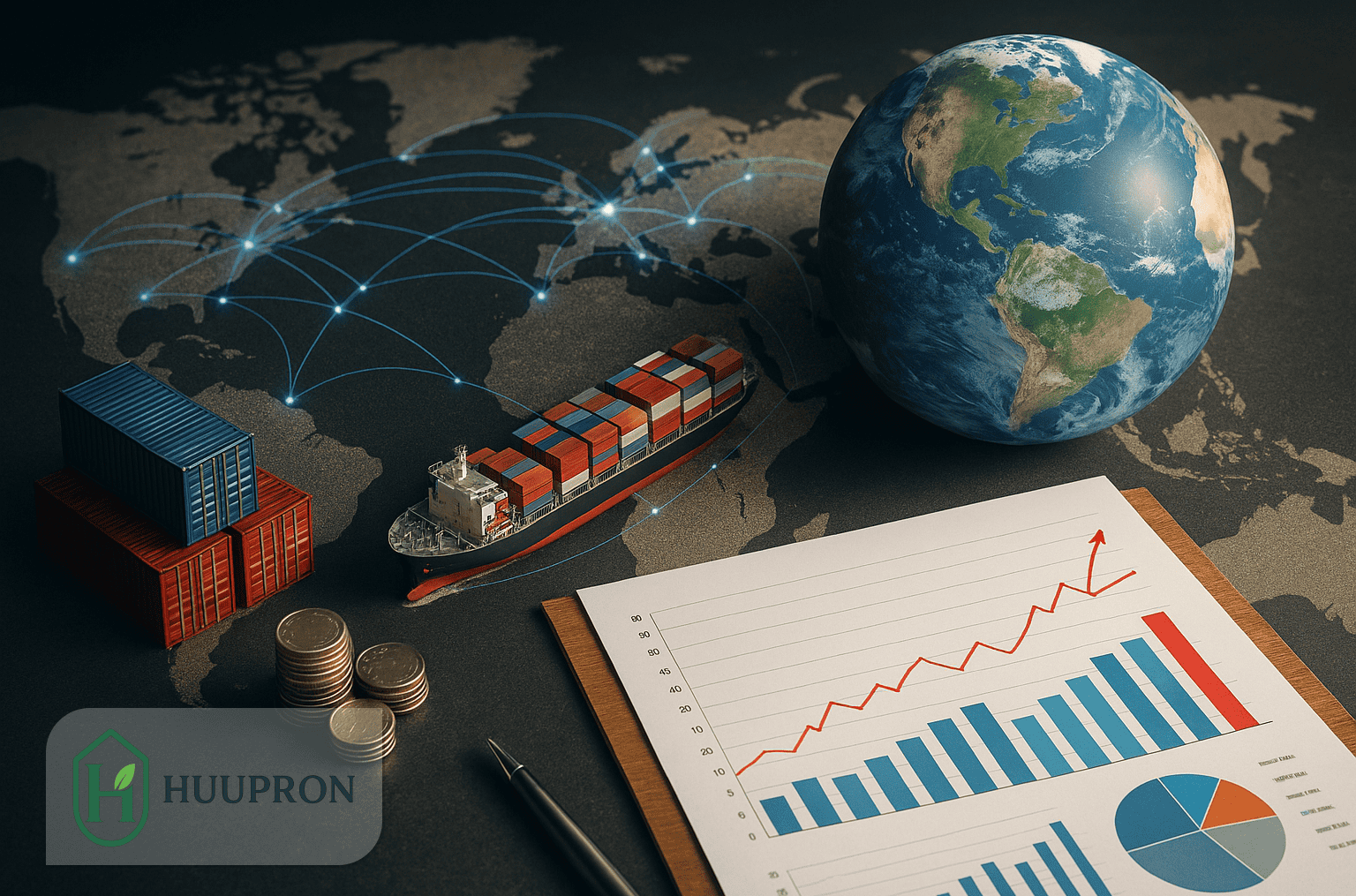
Global Trade in 2025: Challenges and Opportunities in Today’s International Economy
Global trade 2025 marks a turning point in the international economy. As global supply chains, technology, and trade policies evolve rapidly, businesses must adapt to survive and grow in this shifting landscape.In today’s volatile economic climate, international trade stands at a historic crossroads. The forces of geopolitics, technology, and sustainability are reshaping global commerce faster than most companies can adapt.This post explores where global trade is heading, what challenges exporters and importers face, and how to turn uncertainty into opportunity.
Why Global Trade Is Facing a Critical Moment
Several global indicators reveal that international business dynamics have entered a period of transformation:
According to the World Trade Organization (WTO), global merchandise trade growth will slow in 2025, falling behind overall global GDP growth.
Rising trade tensions, tariffs, and non-tariff barriers are disrupting supply chains and increasing operating costs.
Rapid digital transformation — powered by AI and automation — is reshaping logistics, customs, and finance across borders.
The geopolitical fragmentation of the world economy has led to new trade blocs and redefined supply routes.
In short: uncertainty is the new normal — and only adaptable businesses will thrive.
Emerging Trends Shaping International Business in 2025
Digitalization and E-Commerce Growth
Cross-border e-commerce and digital platforms are transforming how companies trade goods and services. Digital customs processes and blockchain-based logistics systems increase efficiency — but demand new skills and compliance standards.
Diversified Supply Chains
The pandemic and geopolitical risks have accelerated “nearshoring” and “friend-shoring.” Businesses now seek alternative suppliers and logistics partners to avoid overdependence on a single region or market.
Rise of Emerging Markets
Asia, the Middle East, and Latin America are becoming the fastest-growing trade regions. For companies expanding into these territories, local partnerships and cultural intelligence are key competitive advantages.
Trade Policy and Political Pressure
Evolving trade regulations, sanctions, and policy shifts can drastically alter profit margins. Staying updated on new trade agreements is essential for import/export businesses.
Service-Based Trade Expansion
Beyond physical goods, trade in services — logistics, fintech, insurance, and IT — is growing faster than ever. Businesses offering integrated trade solutions will have the upper hand.
Key Risks in the Current Global Economy
Let’s be direct: 2025’s international economy isn’t for the unprepared.
Here are the major risks every trader should monitor:
Sudden tariffs or export bans disrupting established markets.
Currency volatility impacting transaction value and credit terms.
Supply chain disruptions due to regional conflicts or logistics shortages.
Rising operational costs in transport, energy, and compliance.
Technological gaps — failure to digitalize may lead to market exclusion.
Each of these factors can erode competitiveness unless businesses plan ahead.
Strategic Recommendations for International Businesses
Diversify export markets — reduce dependence on a single country.
Build resilient supply chains — with backup logistics and alternative sourcing.
Invest in digital trade tools — from customs automation to AI-based forecasting.
Monitor global regulations — anticipate changes before they impact operations.
Add value beyond products — offer financing, logistics, or consulting services.
Develop risk scenarios — prepare contingency plans for trade disruptions.
These aren’t abstract ideas; they’re survival principles for a post-globalization world.
Conclusion
From Pressure to Possibility
International trade in 2025 is complex, fast-changing, and full of risk — but also opportunity.
Businesses that embrace innovation, manage risk proactively, and understand global shifts will emerge stronger than those that cling to outdated trade models.The winners of this decade will be those who see change not as a threat, but as leverage.
Contact HUUPRON today to explore partnership opportunities in local manufacturing and brand building.